Cat trees
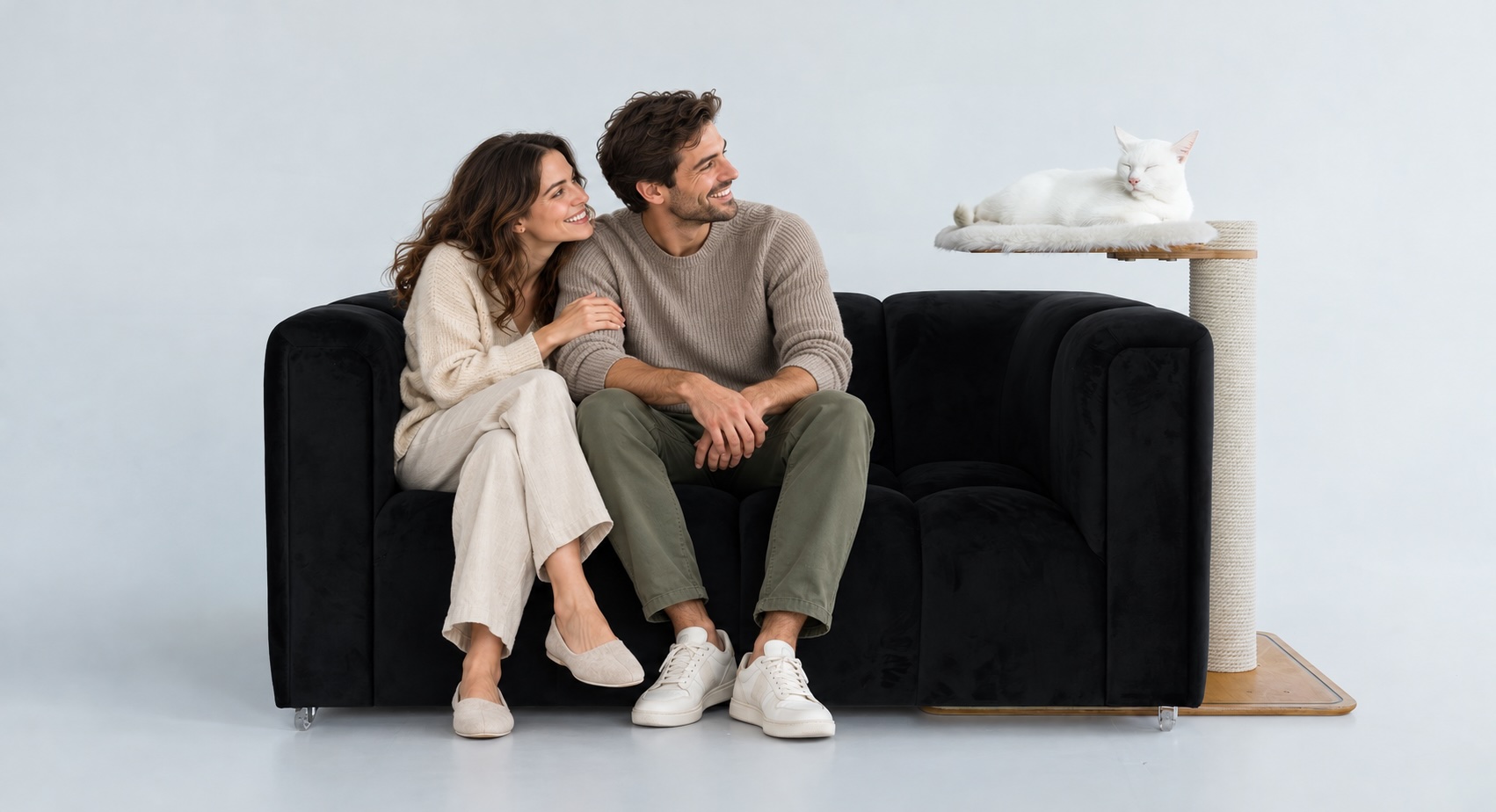
Why most cat trees wobble within a year, and what to look for instead: solid plywood bases, solid wood posts, natural rope and fittings made of metal.
Most cat trees look fine in the photo and start to wobble within a year. The carpet frays, the posts loosen, and the cardboard tube inside a post gets shredded the moment the rope wears through. A sturdy cat tree is not about how heavy the box is. It comes down to a few materials and a few joints, and once you know what to look for, the difference is easy to see.
A cat tree is pushed around far more than most furniture. A cat landing on a top platform hits it with a sudden sideways and downward force, and a cat scratching at full stretch pulls on the post again and again. Over months, three things usually go wrong:
A sturdy tree deals with all three: a stiff base, a solid post and joints that can be tightened again.
Every jump, every landing and every stretch on a cat tree ends up in the base. If the base is thin or hollow, the whole tree rocks, and many cats simply stop using a tree that moves under them.
Kikska bases are cut from solid 20 mm plywood. Plywood is made of thin layers of wood glued with the grain crossing, which makes it stiff, stable and far less likely to split or sag than chipboard or MDF. It also holds screws properly, so the joint between base and post stays tight year after year.

A wider footprint resists tipping better, so the base should grow with the tree. Kikska bases come in four sizes, all pre-drilled:
As a rule of thumb, the taller the tree and the further its platforms reach out to the side, the larger the base it needs. Kikska kits range from 84 cm to 215 cm tall, and the tallest ones stand on the larger square bases. Our guide on how to choose cat tree height covers this in more detail.
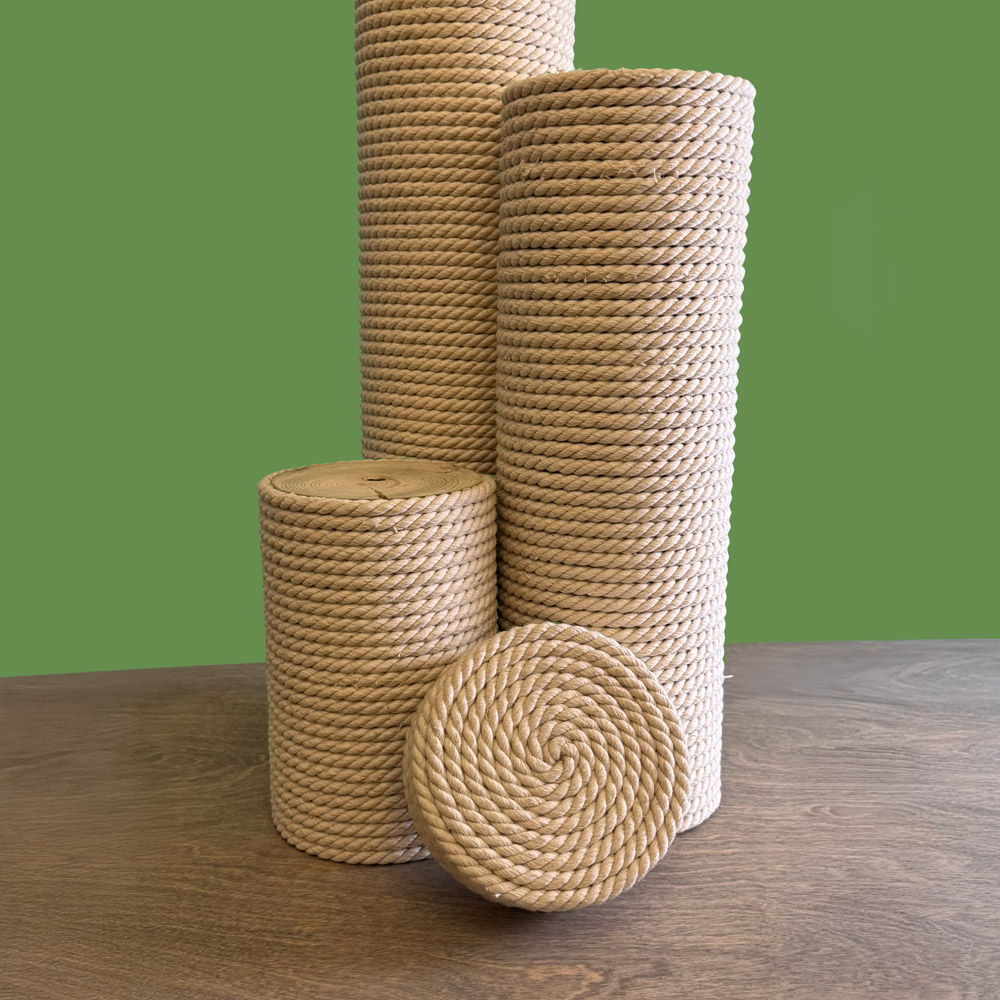
The scratching post is the part a cat uses hardest. Many budget trees wrap rope around a cardboard or plastic tube, which crushes or snaps once the rope is worn. Our posts are solid wood, 13 cm across, so they stay straight and rigid under a full-weight stretch and give a cat a satisfying, solid surface to pull against.
Diameter matters too. A thin post flexes when a large cat hangs on it, and it can feel unstable to the cat even if it never breaks. A 13 cm solid core gives a wide, firm surface for both front paws. Posts come in 20, 40 and 80 cm lengths and join end to end, so a tall column is built from short, rigid sections rather than one long, springy tube. If you share your home with a big cat, see our guide to the best cat tree for large cats.
The rope decides how a post feels to the claws. We wrap every post tightly in natural fibre, and you choose which one:

A tight wrap matters as much as the fibre. Loosely wound rope slides and bunches under the claws, and gaps let the rope unravel faster. Rope is a wearing part on any scratching post, so it helps when a worn post can be replaced on its own rather than the whole tree. For a closer comparison, read sisal vs cotton rope.
A tree is only as strong as the way its parts connect. Every Kikska joint is metal:
Metal threads in solid wood do not loosen the way plastic connectors do. If a joint ever needs it, a quarter turn with the Allen wrench brings it back to tight.
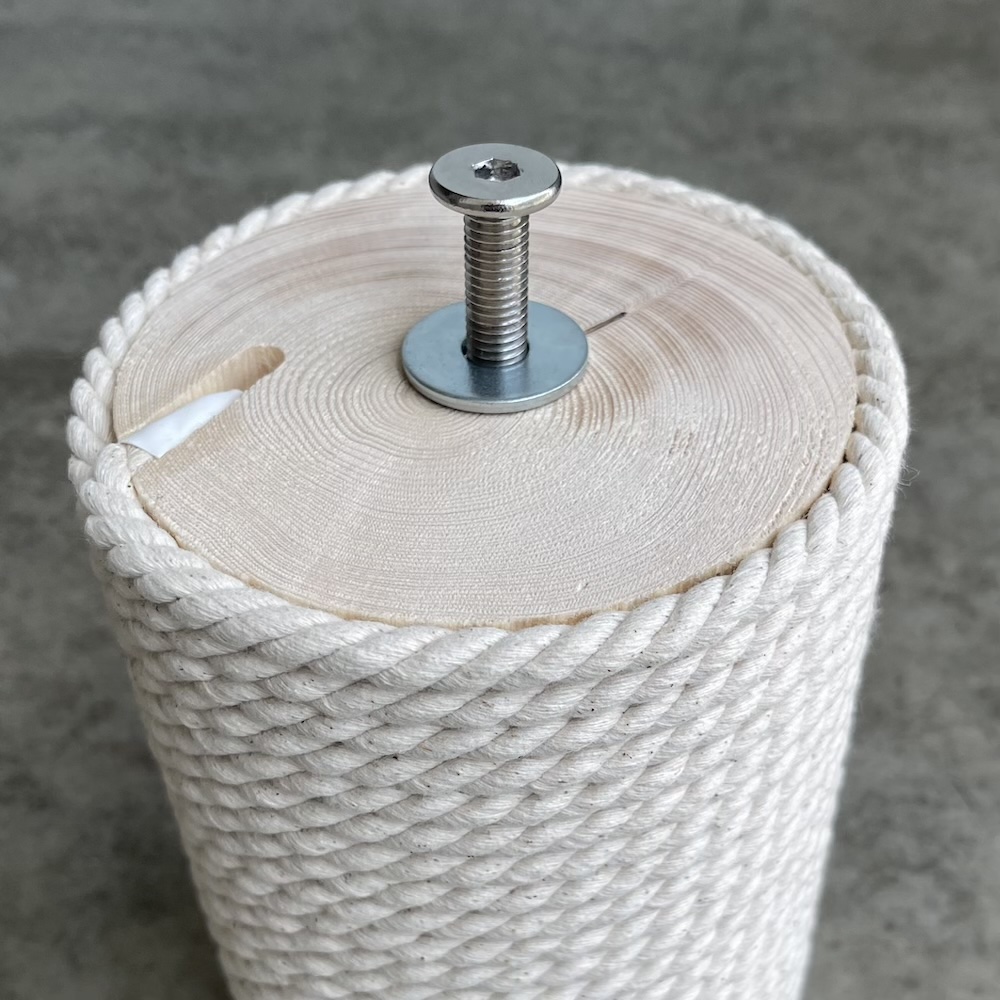
The T-nut flange is worth a closer look. Instead of a screw biting straight into the platform, it gives the screw a metal thread to turn into, so the platform can be taken off and put back many times without wearing the hole. That is what makes it practical to rearrange a modular tree later. Step-by-step instructions are on our assembly page.
Platforms and holders are cut from 15 mm plywood, 44 cm across, so a large cat can stretch out without hanging over the edge. Every wooden surface is finished with 100% organic wood oil rather than lacquer or foil. Oil soaks into the wood instead of sitting on top, so there is no coating to chip or peel, and the grain stays visible.
A platform held out to the side of a post on a platform holder adds leverage, because a cat landing on the outer edge pushes on the post like a lever. That is fine on a well-built tree, but it is another reason to balance side platforms: place them on alternate sides as the tree rises, and choose a wider base if several platforms reach out in the same direction.
Faux fur pads attach to the platforms with Velcro. When one looks tired, take it off, give it a shake and press it back on, or swap in a new one. Wool caves are hand-felted from 100% New Zealand wool, which stays warm in winter and cool in summer.

Soft parts do not hold the tree up, but they affect how long it stays in use. A tree with glued-on carpet often gets thrown out when the carpet is worn, even if the frame is still sound. Removable pads mean the frame and the soft parts can each live their own life. Read more in our guide to modular cat trees with replaceable parts.
A standing tree relies on its base and the floor. If floor space is tight, a tree can take its stability from the building instead:
Not sure which suits your room? Compare the options in standing, wall-mounted or hanging.
Not on its own. Weight low down in the base helps, but the width of the base, the stiffness of the materials and the quality of the joints matter just as much. A heavy tree with loose joints will still wobble.
Tighten it with the 6 mm Allen key. On a tree with metal screws in solid wood, a quarter turn is usually enough.
Every part in a Kikska tree is sold on its own, and each comes with a one-year warranty against manufacturing defects. Explore our cat tree kits or browse the individual parts.
Modular cat tree kits from 84 to 215 cm. Every part fits every other part, so the tree can grow with your cat.

Made in Europe from modular, replaceable parts. Add a level, swap a cushion, change the layout: the tree you buy today keeps working for years.
Worldwide delivery
Shipped with UPS, DHL and FedEx.
Money-back guarantee
Not right for your cat? You get your money back.
Secure checkout
Pay safely with Stripe, PayPal or Apple Pay.
Replaceable parts
Every part can be swapped or reordered.

Modular cat trees, made in Europe and delivered worldwide.