Cat care
Sisal is firm and rough, cotton is softer and quieter. How the two ropes differ, which cats prefer which, and how to get your cat to use the post at all.

Cats do not scratch to be naughty. Scratching pulls away the worn outer layer of the claws, stretches the muscles of the back and shoulders, and leaves scent from glands in the paws: a message to other cats that says this is mine. A cat will scratch somewhere every day. The only question is whether it is your sofa or a scratching post.
The surface makes a big difference to which one wins. Most good scratching posts are wrapped in one of two natural ropes: sisal or cotton.

Cats are particular about texture. A scratch only does its job if the claws can hook in and pull against something that resists, and every cat has its own idea of the right amount of resistance. A surface that is too smooth gives nothing to grip. One that feels unpleasant gets abandoned for the nearest rug or armchair. That is why two cats in the same home can treat the same post very differently, and why the choice of rope is worth a few minutes of thought before you buy.
Habit plays a part too. A cat that has spent months scratching one material tends to look for something that feels similar. Matching the new post to what your cat already enjoys is the quickest way to win it over.
Sisal is a stiff natural fibre made from the leaves of the agave plant. Wound tightly around a post, it gives a firm, rough surface that claws can really dig into, which is the texture most adult cats look for.
Sisal is the classic scratching surface for good reason: the stiff fibres resist the claw, so a cat gets a strong, satisfying pull. That same stiffness means it sheds small fibres as it is used, especially in the first weeks. A quick vacuum around the base deals with it. Over time, the most-used band of rope becomes fluffy and frayed. That is normal and shows the post is working. Sisal has a natural, slightly golden colour and a rustic texture that suits warm wood tones.
Cotton rope is softer and smoother. Claws still catch in the twist of the rope, but more gently, and it is noticeably quieter.
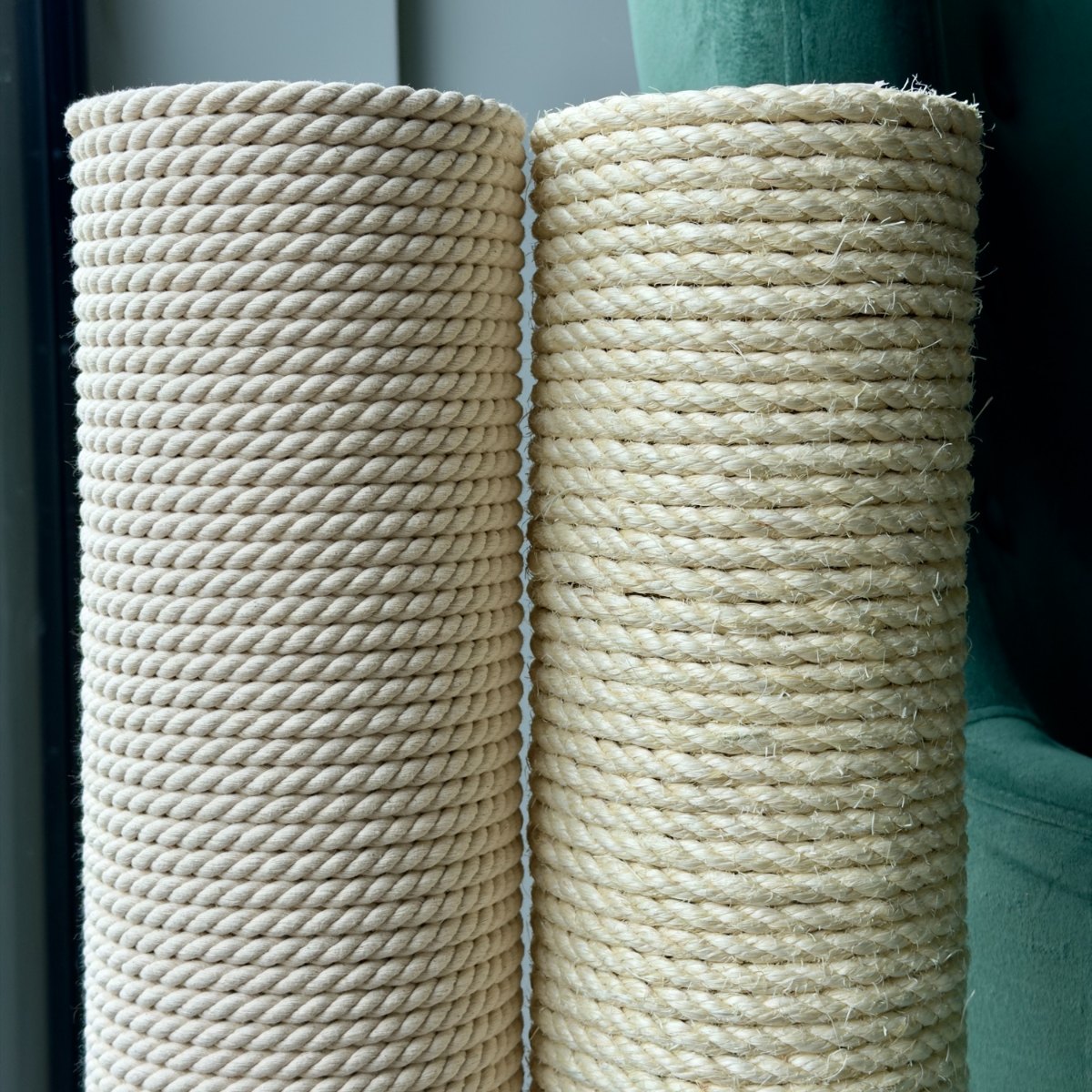
Cotton is kinder to small, sharp kitten claws and to older cats whose joints or claws are less strong. It does not shed in the same way as sisal, so it stays tidier, though it will show wear and marks over time like any textile. Because it is softer, a very strong adult scratcher may find it less satisfying than sisal and drift back to the carpet. For gentle scratchers, it is often the surface they take to straight away.
Watch what your cat scratches now. A cat that attacks the doormat or a sisal rug will almost certainly love sisal. A cat that goes for the arm of a fabric sofa or the bedspread may prefer cotton. If you are not sure, sisal is the safer first choice for most adult cats, and cotton for a kitten.
Every Kikska scratching post comes in either rope, in 20, 40 and 80 cm sections, on a solid wood core 13 cm across. Because posts are sold separately and join end to end with a hairpin screw, you can even mix them: sisal at the bottom where most scratching happens, cotton higher up.
If your cats have different tastes, you do not have to pick one. A tree with both ropes lets each cat choose, and a second post in another room reduces competition for the favourite spot. Mixing sections on one tree is also a simple way to test which rope your cats prefer before adding more of it.
Sisal's natural tone sits well beside the warmer wood finishes, such as Honey, Brown or Choco. Cotton's light colour suits pale rooms and the White, Grey and Natural finishes. Our guide to modern cat tree interior design has more ideas.
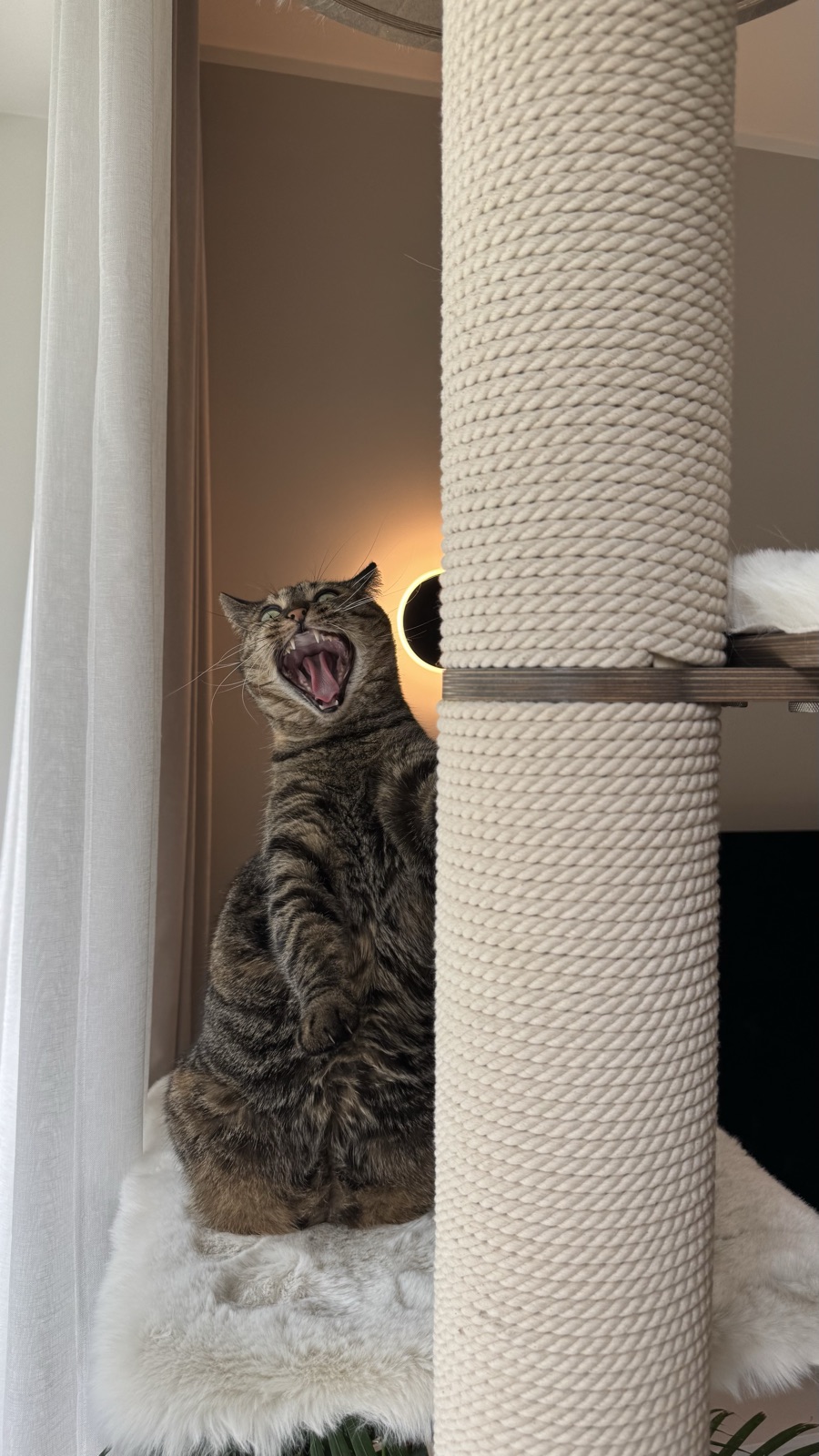
Rope posts need little care. Vacuum around the base and over the rope now and then to lift loose fibres and hair; a reusable pet hair remover helps on platforms and pads. Trim any long loose threads with scissors rather than pulling them, so the winding stays tight. If the rope gets marked, spot-clean it with a damp cloth and let it dry fully before your cat uses it again. Avoid strong-smelling cleaners, which can put a cat off a surface it previously liked.
A well-used post is a sign that it works. When the rope is scratched through, there is no need to replace the whole cat tree: on a Kikska tree you unscrew the worn post and screw on a new one, in sisal or cotton. Browse scratching posts, or read our guides to wall-mounted and hanging scratching posts if floor space is tight.
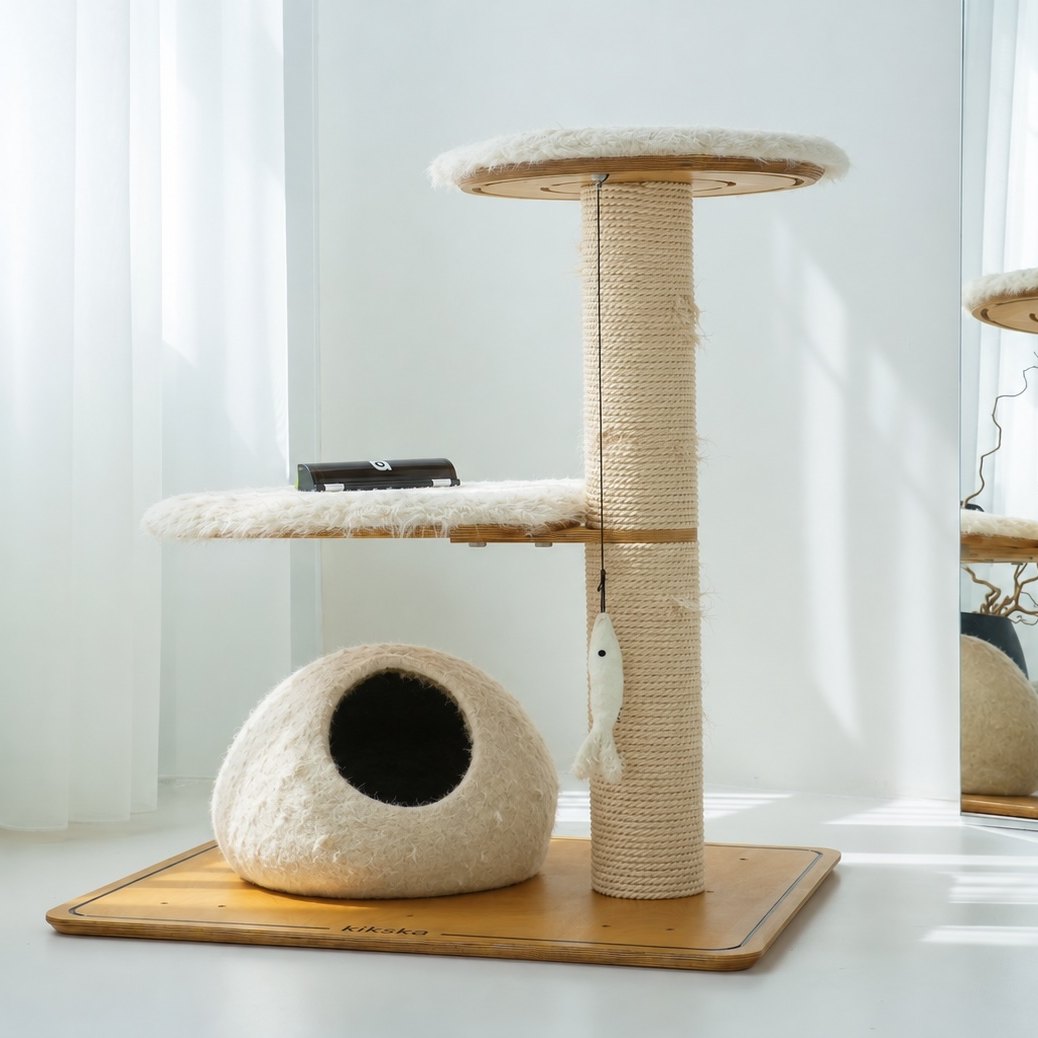
Replacing a section is also a chance to change your mind. If your cat ignored cotton, swap in sisal, or the other way round. Read more about replaceable parts on a modular cat tree.
Sisal is a natural plant fibre and is widely used on scratching posts. As with any toy, keep an eye out for long loose threads and trim them.
It can, especially for cats that like soft fabrics. Placement matters as much as the rope: put the post right beside the sofa and reward its use.
Yes. Posts join end to end with a hairpin screw, so you can replace a cotton section with sisal, or add a section of the other rope, without changing the rest of the tree.
Start with cotton for small claws, then add or swap in sisal as your cat grows and scratches harder. A modular post grows with them.
Modular cat tree kits from 84 to 215 cm. Every part fits every other part, so the tree can grow with your cat.

Made in Europe from modular, replaceable parts. Add a level, swap a cushion, change the layout: the tree you buy today keeps working for years.
Worldwide delivery
Shipped with UPS, DHL and FedEx.
Money-back guarantee
Not right for your cat? You get your money back.
Secure checkout
Pay safely with Stripe, PayPal or Apple Pay.
Replaceable parts
Every part can be swapped or reordered.

Modular cat trees, made in Europe and delivered worldwide.
.png)