Cat trees
Most cat trees are thrown away when one post wears out. A modular cat tree lets you replace just that part, add levels later and keep the tree for years.

Cats are hard on their furniture, and they should be: scratching is how they stretch, keep their claws healthy and mark their territory. The problem is what happens next. On most cat trees, the part that wears out first is glued or stapled to everything else, so one shredded post means the whole tree goes in the bin. A modular cat tree works the other way round.
This guide explains what modular actually means, which parts wear and how to replace them, how a tree can change as your cat gets older, and how to tell whether a tree you are considering is genuinely modular or only described that way.
A modular cat tree is built from separate parts that connect with screws instead of glue. Each part can be taken off, replaced or moved on its own. In a Kikska tree that means:
The important point is that the parts share the same connections. Posts are solid wood, 13 cm across, so a rope cap, a post spacer or another post fits any of them. Platforms are 15 mm plywood, 44 cm across, in a square or round shape, and lock in place with stainless knurled screws that thread into T-nut flanges. The base is fixed to the first post with a flat-head hex socket screw and washer. Every one of those joints can be undone with the 6 mm Allen key and done up again.

You can see them all in the parts section, and the scratching posts are listed on their own too.
Posts get scratched, fur pads get loved flat, toys get chewed. When a part has done its job, you replace that part and keep the rest. A new post is a fraction of the price of a new tree, it arrives in a small parcel, and it screws on in minutes with the same 6 mm Allen wrench that came in the box.
The assembly guide shows each connection if you want to check the order.
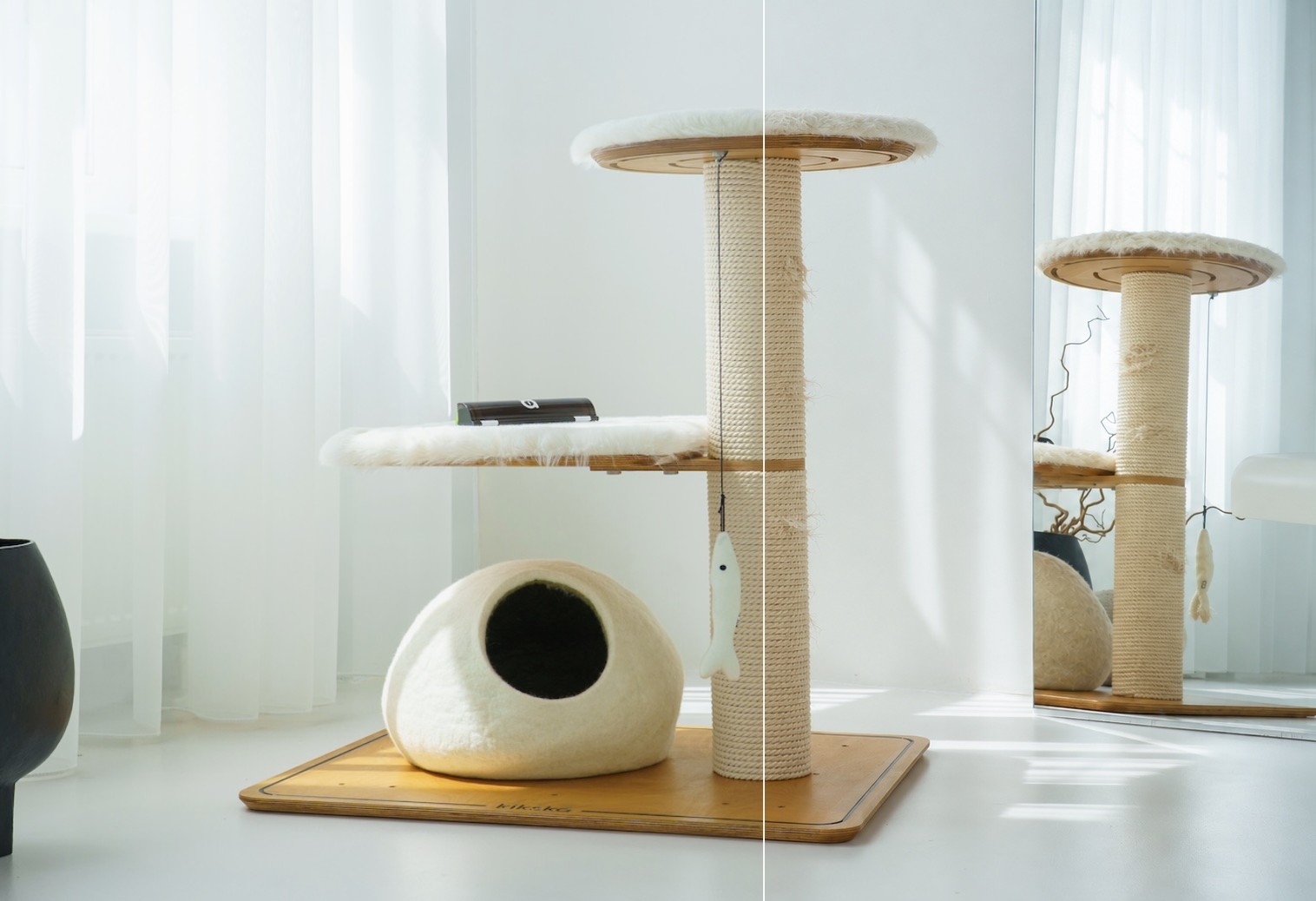
A kitten needs short steps and soft landings. A young adult wants height. A senior cat prefers a low, wide perch again. With a modular tree you change the layout instead of the tree: add a post for more height, a holder and platform for a new level, a wool cave for a quiet spot, or take levels away when your cat slows down.
The configurator includes example builds, Start small, Grow up and Going wild, which show how a tree can move through these stages. Our guides on configuring a cat tree and choosing the right height cover the layout decisions in more detail.
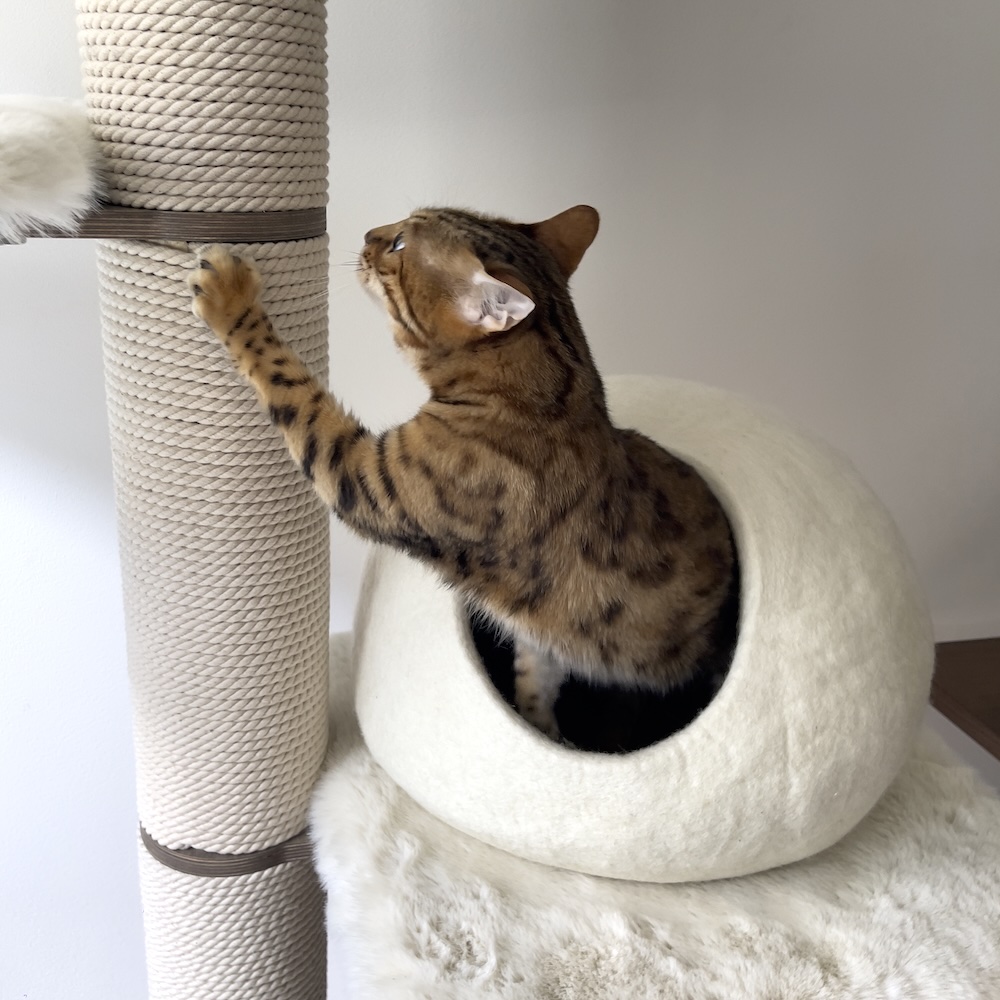
Redecorating or moving house? Fur pads come in Coconut Milk, Mushroom and Cool Grey, wood in six shades, and rope in cotton or sisal. Swap a fur pad or a platform and the tree matches the new room, with no need for a new tree.
The six wood shades are Natural, Honey, Grey, White, Choco and Brown, all finished with organic wood oil. Wool caves come in Coconut Milk, Mushroom and Grey Stone. Because posts and platforms are sold separately, you can also change rope type when you replace a post, for example moving from cotton to sisal if your cat prefers a coarser texture. Our comparison of sisal and cotton rope may help, and modern cat tree interior design has ideas for matching colours to a room.

Buying one well-made tree and replacing parts over the years costs less than replacing a cheap tree every year or two. It also keeps whole cat trees out of landfill. Most of a Kikska tree is solid wood, plywood and natural rope, built to outlast the parts your cat wears down.
A modular tree also moves well. Because it unscrews into flat and compact parts, it can be packed into boxes and rebuilt in a new home, or reconfigured to fit a different room. If you want to know more about the materials and how the parts are made, read how Kikska cat trees are made.

At Kikska the answer to all three is yes. See every replacement part, or plan a new tree in the configurator.
Kikska parts share the same connections, so posts, platforms, holders, caves and pads fit any Kikska tree, whichever kit it started as.
No. The 6 mm Allen key in the box handles every screw on the tree.
Wall setups use dedicated wall mounts, and hanging setups use the hanging parts. The configurator's wall mode takes up to three 80 cm posts, and its hanging mode builds up to 180 cm, so plan the layout there first. A hanging setup needs a solid ceiling, such as concrete or a joist.
Lift them off their Velcro tabs and shake them out. A reusable pet hair remover helps between cleans, and a worn pad can be replaced on its own.
Any item that arrives damaged is replaced free of charge, and every tree has a one-year warranty against manufacturing defects.
Modular cat tree kits from 84 to 215 cm. Every part fits every other part, so the tree can grow with your cat.

Made in Europe from modular, replaceable parts. Add a level, swap a cushion, change the layout: the tree you buy today keeps working for years.
Worldwide delivery
Shipped with UPS, DHL and FedEx.
Money-back guarantee
Not right for your cat? You get your money back.
Secure checkout
Pay safely with Stripe, PayPal or Apple Pay.
Replaceable parts
Every part can be swapped or reordered.

Modular cat trees, made in Europe and delivered worldwide.